Supply chain & logistics
Supply chain and logistics support in Belgium
OCEANSTAR INDUSTRIES BV coordinates procurement, warehousing, intralogistics and outbound flows for industrial clients, keeping the operational sequence and the documentation aligned.
See how an engagement startsWhat we coordinate across the chain
Belgium's position makes supply chain work here inherently cross-border. Goods move between ports, warehouses and plants across four countries before they reach a line. The work below is sorted the way we sort it with clients: what must happen, what is safe once confirmed, what we refuse to take on, and what needs attention early.
Procurement
Replenishment built on real consumption, not on emergency calls.
Supplier follow-up
Orders, confirmed dates and escalations kept on one rhythm.
Warehousing
Storage sequenced so cost and customs treatment stay predictable.
Intralogistics
Receiving, put-away, transfer, picking and dispatch as one flow.
Cross-border flows
Antwerp, Zeebrugge, Brussels Airport and the road legs beyond.
Project cargo
Frames, lifting points and a loading sequence settled early.
Visibility
A record updated as events happen, in a format you actually read.
Out of scope
We do not replace your carriers, warehouses or customs specialists.
The sequence is the service
A warehouse step, a customs document and a road leg are one chain. Change one and the others have to be re-checked, which is why we treat the sequence and the paperwork as a single job rather than two handovers.
Procurement coordination
Buying that follows consumption
Procurement support starts with knowing what actually gets consumed. For repetitive industrial purchasing, including fasteners, consumables and maintenance items, replenishment should follow consumption rather than emergency calls. A plant that runs out of a low-cost part stops a line just as effectively as one that runs out of a major component.
We help structure that purchasing so the critical items stay available without overstocking the slow movers. In practice that means separating what the line cannot run without from what simply gets ordered often, agreeing a reorder point for each, and reviewing the list when production changes rather than when a shelf empties.
Supplier follow-up
Orders, dates and delays
Supplier follow-up is the unglamorous core of supply chain work. Orders placed, dates confirmed, changes tracked, delays escalated before they become line stoppages. It requires a rhythm and a record.
Where a client has multiple suppliers across several countries, the follow-up has to account for different working weeks and different documentation habits. A confirmation that arrives on a Friday afternoon in one country may already be two days old by the time the receiving plant reads it.
Contact OCEANSTAR INDUSTRIES BV
Warehousing
Storage is a planning question before it is a space question
Goods may arrive from outside the EU, be held, repacked and redistributed, and the order of those steps affects both cost and customs treatment. Change the order and the duty position can change with it.
We coordinate warehousing so goods move in a defined sequence, with handling steps documented and stock visibility maintained for the client. Repacking, labelling and redistribution are planned before arrival, not decided on the dock.
Intralogistics and material flow
Flow as it runs, not as it was designed
Intralogistics covers movement inside a site: receiving, put-away, internal transfer, picking and dispatch. Small inefficiencies here accumulate quietly. A put-away rule that does not match how the line actually picks creates extra handling on every order.
We look at the flow as it runs, not as it was designed, and adjust the sequence where it saves movement. Often the finding is a slotting decision rather than a new system.
Step
What it covers
Receiving
Arrival, count and condition check
Put-away
Slotting that matches picking
Internal transfer
Movement between storage and line
Picking
Order build without extra touches
Dispatch
Loading sequence and paperwork
Each step is reviewed against how the site actually operates today. Where a step can be merged or shortened, we say so rather than adding a layer.
Cross-border flows
Four countries, one plan
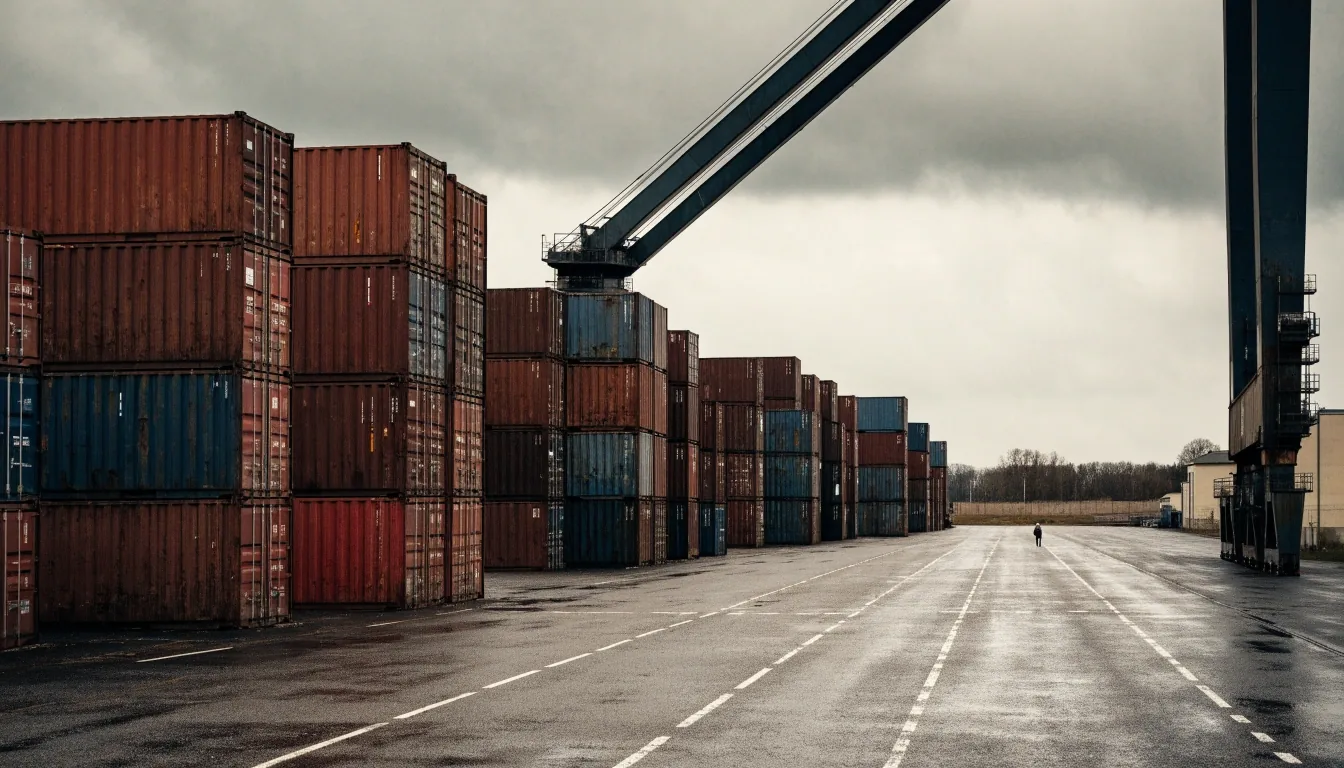
Goods entering Belgium may arrive through Antwerp, Zeebrugge or Brussels Airport, and leave by road into France, the Netherlands or Germany.
Each leg carries its own documentation and handling expectations. Keeping those legs connected matters, because a change on one can invalidate the plan on another. Clients with multi-country operations tend to value this coordination more than any single service.
Project cargo and oversized shipments
Project cargo needs planning earlier than general freight. Transport frames, lifting points, protection against handling damage and a loading sequence that matches the transport plan all have to be settled before the goods are ready to move.
When packaging is decided late, the delay usually appears at the point where it is most expensive. We would rather argue about a frame drawing than about a damaged machine.
Visibility and reporting
A status you can read without asking
Visibility means the client can see the status of an order without asking. That requires a record updated as events happen, not reconstructed afterwards.
We agree the reporting format with each client at the start, because a report nobody reads is just administration. The useful version shows what moved, what is at risk and what needs a decision. If a weekly list turns into a monthly one because nothing changed, that is a working format too.
Working with your existing partners
The coordination layer is the value
Most clients already have carriers, warehouses and customs specialists. We are not trying to replace them. The coordination layer is where the value sits: making sure the carrier knows the loading sequence, the warehouse knows the handling requirement and the documentation matches what is in the container.
Your carriers keep their routes and rates; we make sure they get the sequence and the loading plan.
Your customs specialist keeps the declarations; we keep the commercial and handling documents consistent with them.
Your warehouse keeps its layout; we review put-away and picking rules where they cost movement.
Starting a supply chain engagement
Start with one flow, not a programme
Engagements usually start with one flow: a procurement category, a warehouse operation, or an inbound corridor. Review what exists, agree what changes, set the reporting rhythm. That first flow is where the working method gets tested, and it is a cheaper place to find out than a full network redesign.
Official contact details
- Address
- Raveschoot 22, 9080 Lochristi, Belgium
- Phone
- 756645082
- [email protected]
- Working hours
- Monday to Friday, 9:00 AM – 6:00 PM
- Registration number
- 1126073394
Questions we get before the first flow
Do you replace our existing carriers and warehouses?
No. Most clients keep their carriers, warehouses and customs specialists. Our job is the layer between them: making sure each partner has the sequence, the handling requirement and the documents that match the load. Where a partner is already doing that well, we leave it alone.
How quickly can a procurement category be reviewed?
It depends on how the consumption data is kept. Where there is a usable order history, the review of one category is a short exercise: what gets used, at what rate, from which suppliers, and where the reorder points sit today. Where records are thin, the first step is agreeing what gets recorded from now on.
Can you work with goods arriving from outside the EU?
Yes, and the sequencing matters more in that case. Goods may arrive, be held, repacked and redistributed, and the order of those steps affects cost and customs treatment. We coordinate the warehouse steps around what your customs specialist has declared, rather than adjusting declarations after the fact.
What does reporting look like in practice?
It is agreed at the start, not delivered as a fixed template. The useful version shows what moved, what is at risk and what needs a decision from your side. A report that arrives on time and gets read beats a longer one that arrives late and gets filed.
Which parts of the chain do you not take on?
We do not act as your customs agent and we do not run a transport fleet. Those stay with your existing partners. We also decline engagements where the expectation is a single supplier relationship being pushed through without a real operational change, because the coordination work would have nothing to hold on to.
Related pages
Supply chain work sits next to our other service lines. If your question is about packaging, engineering or corporate procurement rather than flow coordination, one of these will fit better.